Project File / 06 / Operations tool
I accidentally built ecommerce for my garage sale
A whole-house moving sale became an inventory system, public catalogue, request list, and tiny operations platform.
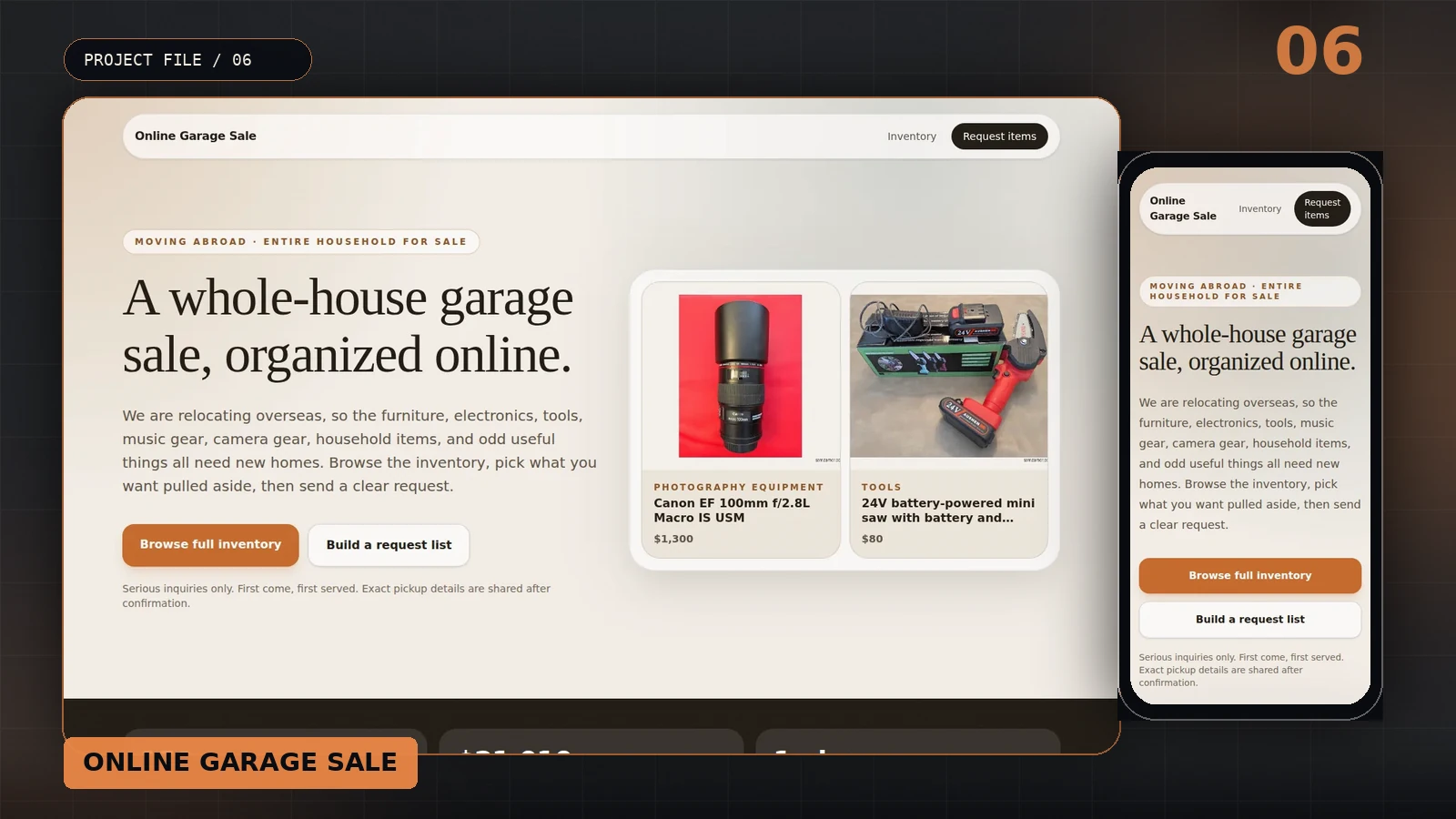
We were moving abroad and had an entire household to sell. Furniture, tools, electronics, camera gear, random useful things, and the category of object you only discover after opening the third drawer in the garage.
The normal solution is a spreadsheet, a marketplace account, and six weeks of answering 'is this available?' from people who never reply again. I built a website instead. This was either sensible or a symptom.
06.01
A catalogue is calmer than a message thread
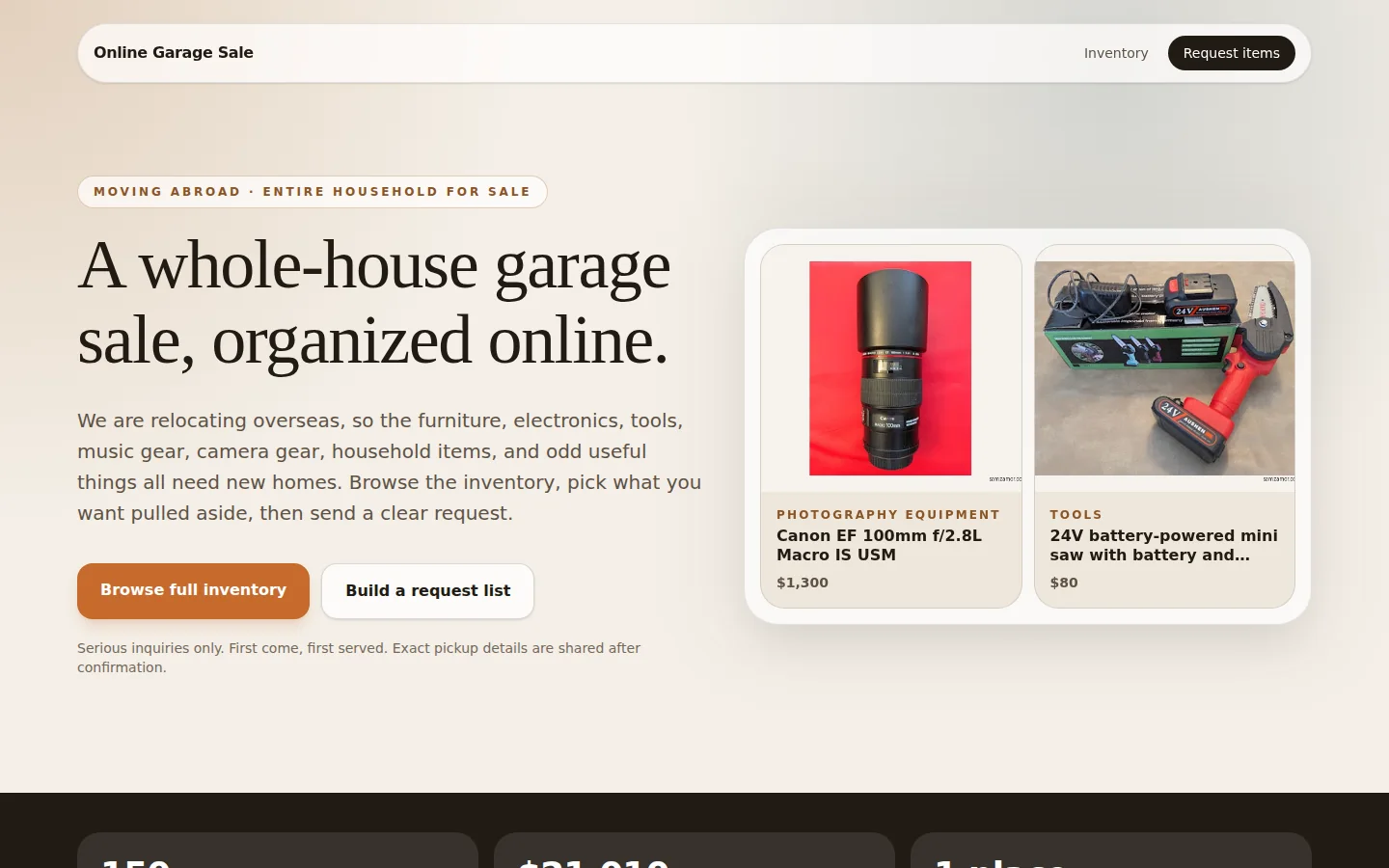
The public side treats the sale like a small ecommerce collection. People can browse the full inventory, open item details, inspect photos, shortlist what they care about, and send one request list.
That last part matters. Ten separate marketplace messages create ten separate coordination loops. One list creates one conversation with context.
Buyer promiseBrowse first. Ask once. Know what you are coming to see.
06.02
The private product is an operations system
Behind the soft beige storefront is a stricter state machine. Items move through draft, review, available, held, and sold. Each listing tracks media, category, description, public price, price confidence, a private floor, inquiries, and channel state for places like Facebook or Kijiji.
A held item can expire. A sold item records the channel and date. The request queue can be reviewed and updated without turning the public catalogue into a second source of truth.
06.03
The no-hold request list
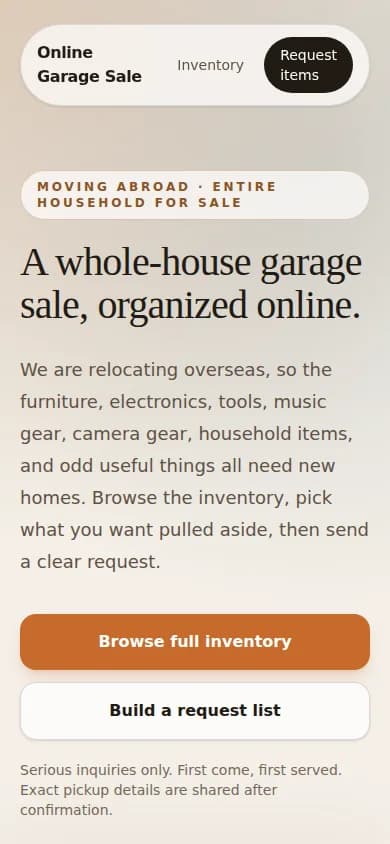
A shortlist is not a reservation. The live flow lets someone select items they want to inspect, then submit their name and contact details for a viewing. The exact pickup information stays private until confirmation.
That boundary prevents the classic garage-sale failure where half the inventory is marked unavailable for people who never arrive. Interest is captured without pretending interest is commitment.
Operational ruleRequests organize pickup. They do not silently hold inventory.
06.04
Small software can remove a lot of social friction
Nothing in this system is technically exotic. That is why it is a useful project. The value comes from matching a messy real process closely enough that everyone has fewer messages to send.
The site did not need a startup story. It needed item states, decent photographs, one request list, and a way to stop selling the same drill twice.
What survived
Three things I would carry into the next build
- Coordination cost is often the real product opportunity.
- Interest, holds, and sales are different states. Model them separately.
- The best tiny tools replace repeated conversations.