Project File / 16 / Publication and content systems
The publication had to earn the commercial handoff
Product design, frontend delivery, and editorial systems for an independent Canadian research publication with 289 live articles and a transparent path into LynxLabs documentation and commerce.
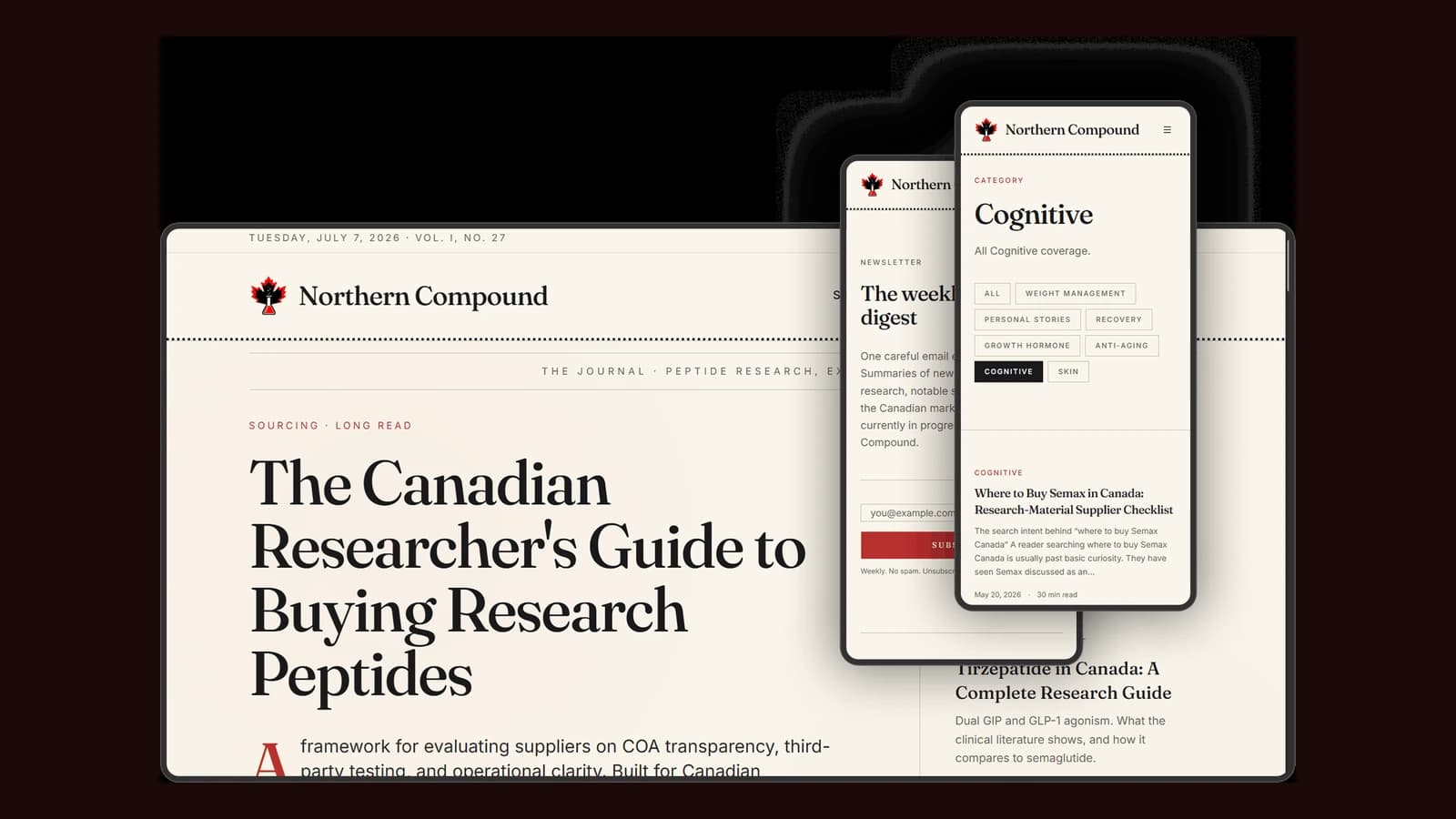
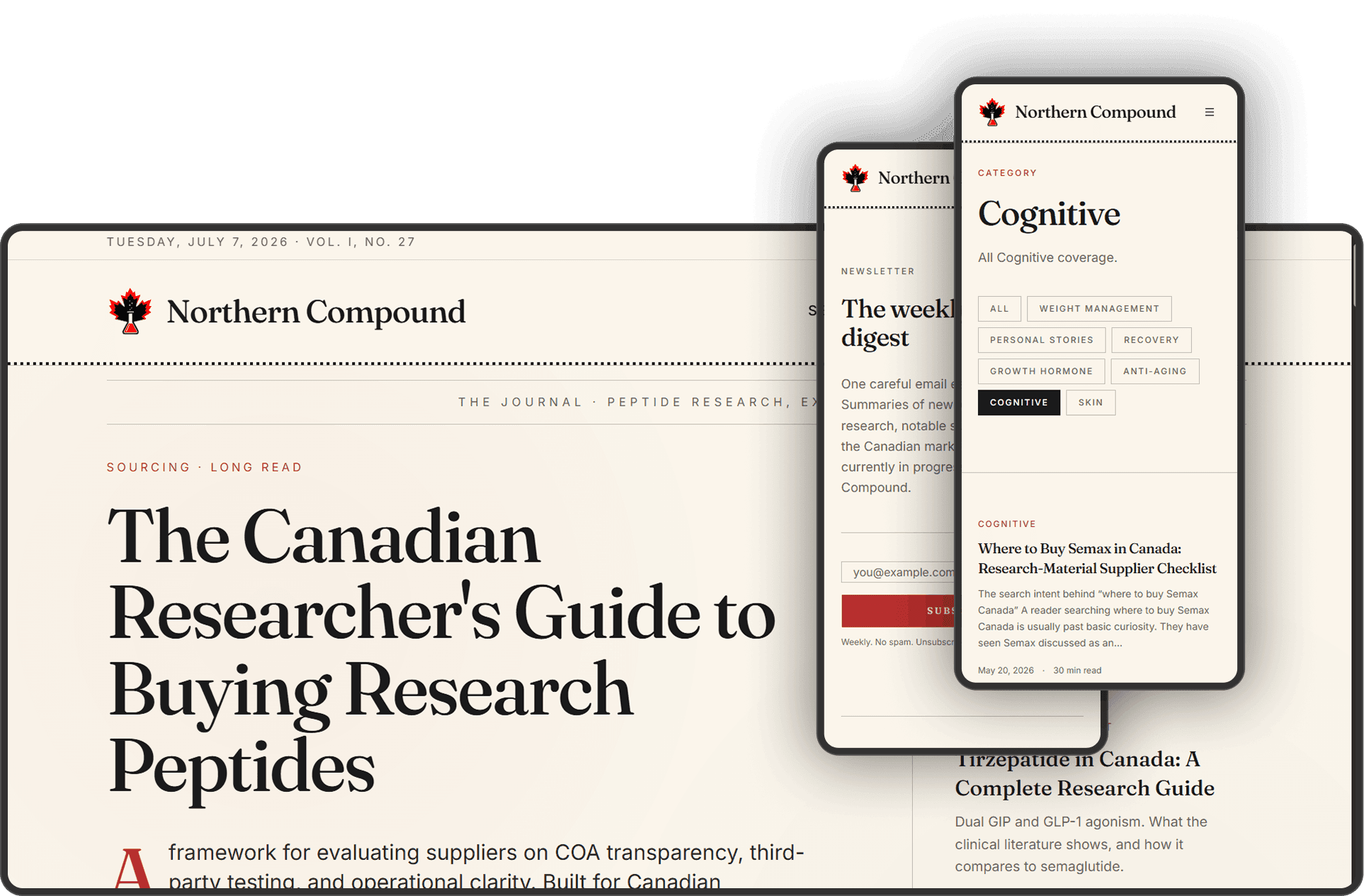
A large content archive can look impressive while still being difficult to trust. Northern Compound needed more than article volume. It needed a publication shape: clear reading paths, visible sourcing standards, consistent research-use-only boundaries, and a commercial relationship that readers could inspect instead of infer.
My work spans the product and operating system behind that surface. The live publication currently contains 289 articles, a structured archive, category paths, related reading, citations, search metadata, product-context components, analytics, and deterministic content checks. The job is making those parts feel like one editorial product rather than a pile of generated pages.
16.01
The archive became a product
Northern Compound organizes its coverage into searchable article, category, topic, and tool paths. Long guides use quick summaries, tables of contents, decision boxes, related reading, and back-to-top controls so a reader can answer a narrow question without losing the broader evidence trail.
That information architecture matters at this scale. With 289 live articles, another post is rarely the highest-value move by itself. The publication gets more useful when the archive reveals the right adjacent explanation, checklist, or source record at the moment a reader needs it.
Publication ruleVolume is inventory. Navigation, evidence, and editorial judgment turn it into a publication.
16.02
Editorial quality needed executable rules
The content system validates public categories, internal links, related-post references, shared disclaimer placement, and Lynx product-link attribution before a release can build. Those checks make the editorial contract runnable instead of relying on someone remembering every convention across hundreds of files.
The same principle appears in the page templates. Structured data, canonical URLs, indexability, metadata, disclosure blocks, citations, and reusable ProductLink components are part of the publishing system, not cleanup added after an article is written.
16.03
The commercial path had to stay transparent
Northern Compound is an independent publication that may link to Lynx Labs when a source meets its published quality criteria. The site says so, and its product links preserve source attribution. That relationship creates a useful constraint: an article has to improve the reader's understanding even if the reader never follows the commercial handoff.
When a path into LynxLabs is earned, it is documentation-first and context-specific. A source checklist, product record, or reservation link can shorten the distance from research to intent, but it cannot replace evidence with sales copy or turn the article into disguised storefront inventory.
Dual mandateEvery change should strengthen the publication and make any commercial handoff easier to understand.
16.04
This file stops before private publication operations
No private analytics, unpublished drafts, editorial queues, credentials, partner operations, or customer information are included here.
The career signal is the public operating range: designing a large editorial product, building the frontend and content system, encoding trust and compliance rules, maintaining search and attribution paths, and iterating against live reader behavior without laundering activity into business results.
What survived
Three things I would carry into the next build
- A content archive becomes a product when readers can find the next useful decision, not merely the next article.
- Editorial standards compound when they are enforced by templates and validators.
- A commercial handoff earns trust by staying explicit, attributable, and secondary to reader value.