Project File / 15 / Commerce product work
The storefront had to make proof easier to inspect
Product design and implementation for a Canadian research-use-only commerce system where documentation, catalog clarity, reservation, and operational follow-through share one path.
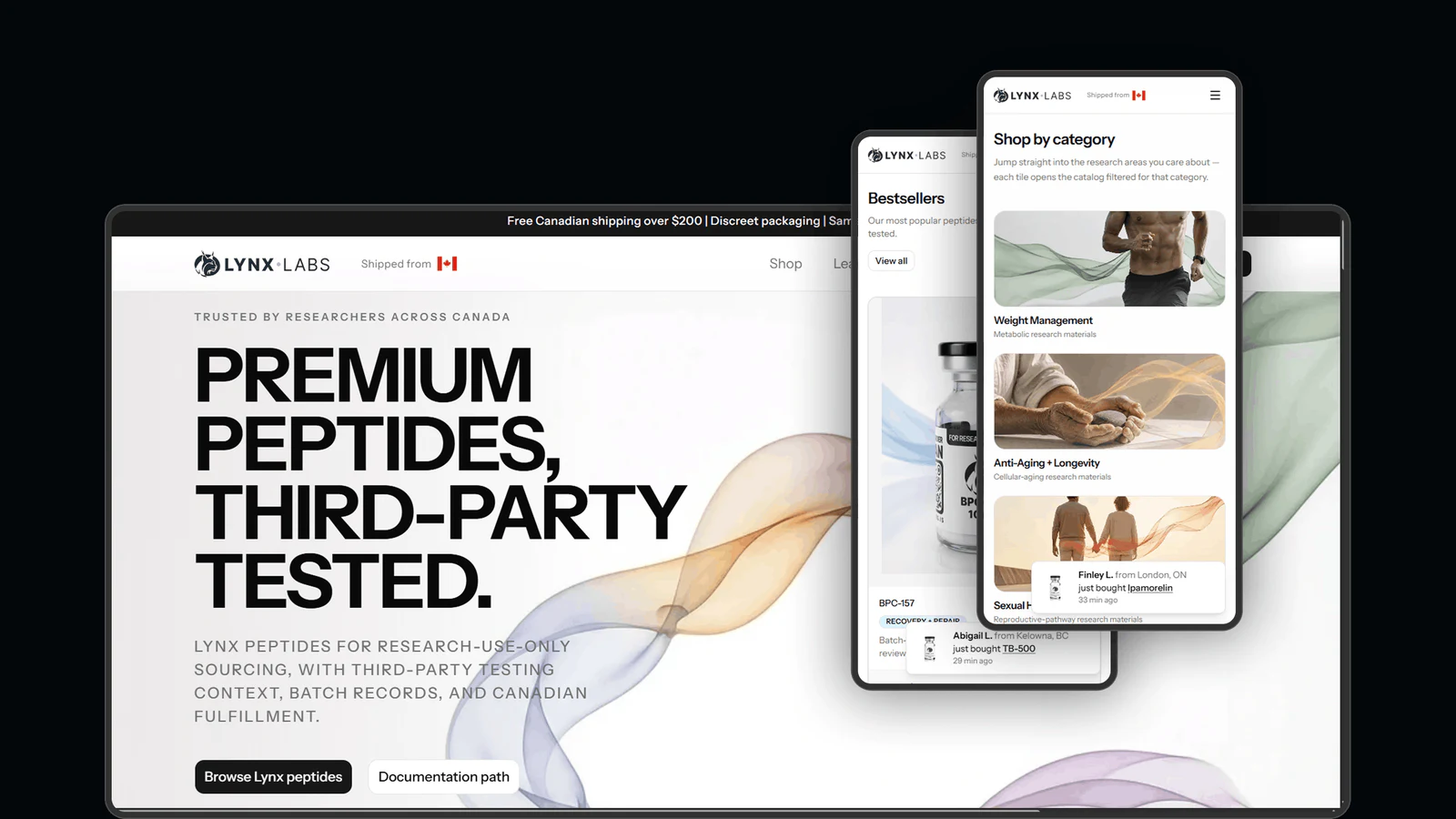
A credible commerce interface cannot ask the customer to trust polish instead of evidence. LynxLabs needed the catalogue, documentation context, stock, pricing, and order path to feel like one product rather than separate marketing and operations systems.
My work spans product design and implementation across that path. The public result includes product records, a current catalogue, a ten-point COA checker, research documentation pages, reservation checkout, source attribution, and recovery mechanics. The hard part is keeping those systems useful without overstating what the business evidence proves.
15.01
Documentation is part of the shopping path
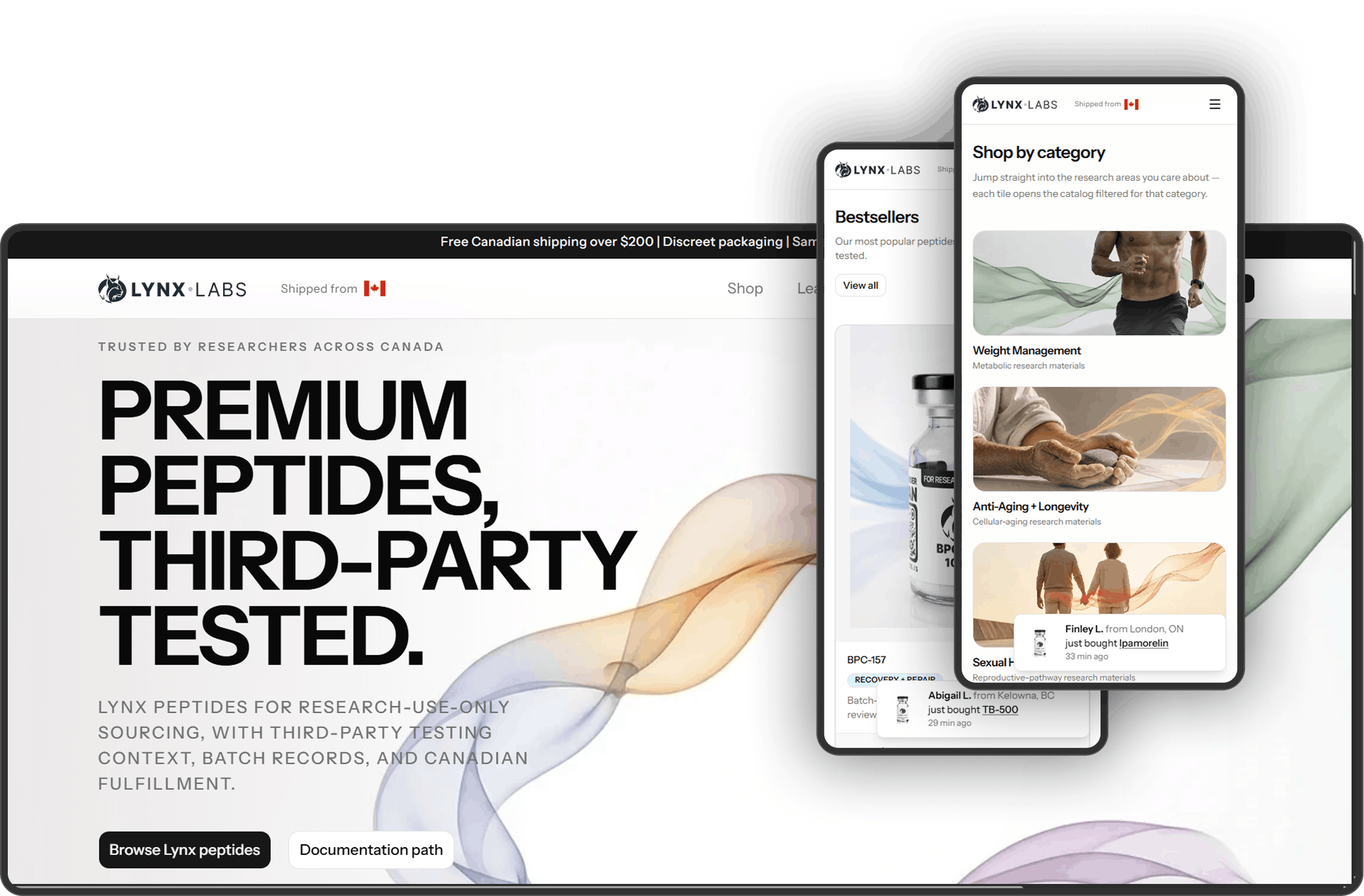
The live catalogue leads with current stock and CAD pricing, then keeps research-use-only framing and batch-documentation context close to the product decision. The COA checker turns that same standard into a free ten-point audit for identity, lot matching, analytical lab details, test dates, and purity methods.
That changes the information architecture. Documentation is not a trust badge pasted beneath a buy button. It is a first-class path that can be inspected before a reservation begins.
Product ruleIf proof affects the decision, it belongs inside the decision path.
15.02
The catalogue and the order flow needed the same truth
The product surface includes search and category filtering, product records, variant and stock context, and direct reservation paths. The checkout remains explicit about its limits: no card number is collected on the site, the order is held for a bounded period, and the user can leave it unpaid when documentation or fulfillment details need clarification.
Keeping that path coherent required more than arranging cards. Catalogue data, selected variants, availability, pricing, analytics identity, and checkout state have to agree as the user moves from discovery into intent.
15.03
Growth work is only useful when it reaches intent
LynxLabs is connected to Northern Compound articles, search landing pages, documentation tools, source attribution, cart and checkout events, and timed recovery. Those systems make the path measurable from a qualified visit through product intent and an order attempt.
The evidence is deliberately not inflated. The current seven-day operating window ending August 12, 2026 contains 0 non-QA orders. That means the work is a functioning, measurable commerce system and an active conversion problem, not a proven revenue case study.
Evidence boundaryA working funnel is proof of product and operational range. It is not proof of commercial traction until real orders arrive.
15.04
This file stops before private commerce operations
No customer identities, order details, private operations, unpublished catalog data, or unsupported commercial claims are included here.
The career signal is the operating range: product design, frontend implementation, backend-connected flows, measurement, compliance-aware content, and honest iteration against live evidence.
What survived
Three things I would carry into the next build
- Trust information works better inside the transaction path than beside it.
- A commerce system needs catalogue, checkout, attribution, and follow-through to agree.
- A public case study gets stronger when it names the missing business result instead of disguising it.