Project File / 18 / Community marketplace
The marketplace works because visibility has to be earned
A 50,000+ member design community where peer ranking, monitored job channels, and visible accountability make trust part of the product.
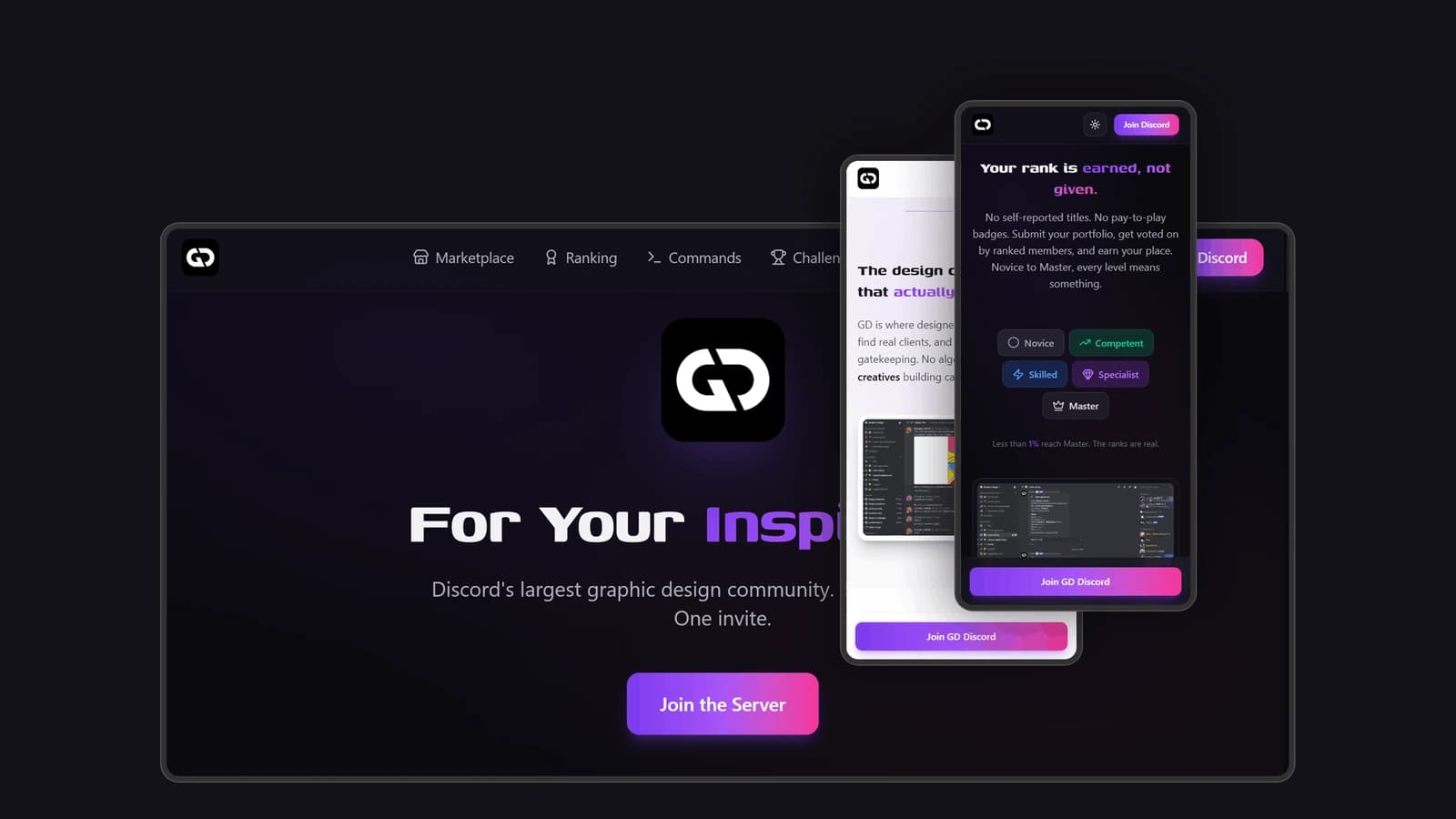
A design community can get large while becoming less useful. More people create more talent and opportunity, but they also create more noise, weak signals, status games, and room for bad actors. GD grew past 50,000 members by treating those pressures as product problems rather than community-manager chores.
I founded and operate GD as infrastructure for a design career: a place where creators can earn visibility, buyers can find accountable talent, and reputation has to survive contact with other people. The interface is Discord, but the product is the trust system underneath it.
18.01
A marketplace has to work for both sides
Designers need visibility, useful feedback, fair access to opportunities, and a credible way to show growth. Buyers need signal through noise, confidence that a seller is accountable, and a path that does not begin in an unmoderated direct message.
Those needs conflict. Visibility that is easy to game becomes useless to buyers. Buyer protection that treats every creator as suspicious makes the market hostile to talent. GD's product work is balancing those sides without pretending one set of incentives can serve both automatically.
Marketplace testCan creators earn a fair chance while buyers still get a trustworthy signal?
18.02
Trust became an operating system
The public marketplace runs in staff-visible job channels. Transactions stay accountable to the community, participants can be rated after a project, and active listings remain visible instead of disappearing into private outreach. The point is not surveillance. It is making bad behaviour harder to hide and good behaviour easier to verify.
That structure changes the experience on both sides. A buyer is not starting from a blank profile and a promise. A designer is not handing work to an anonymous account with no community context. Moderation, visibility, and reputation become part of the transaction path rather than cleanup after something goes wrong.
18.03
Rank is earned by peers, not typed into a profile
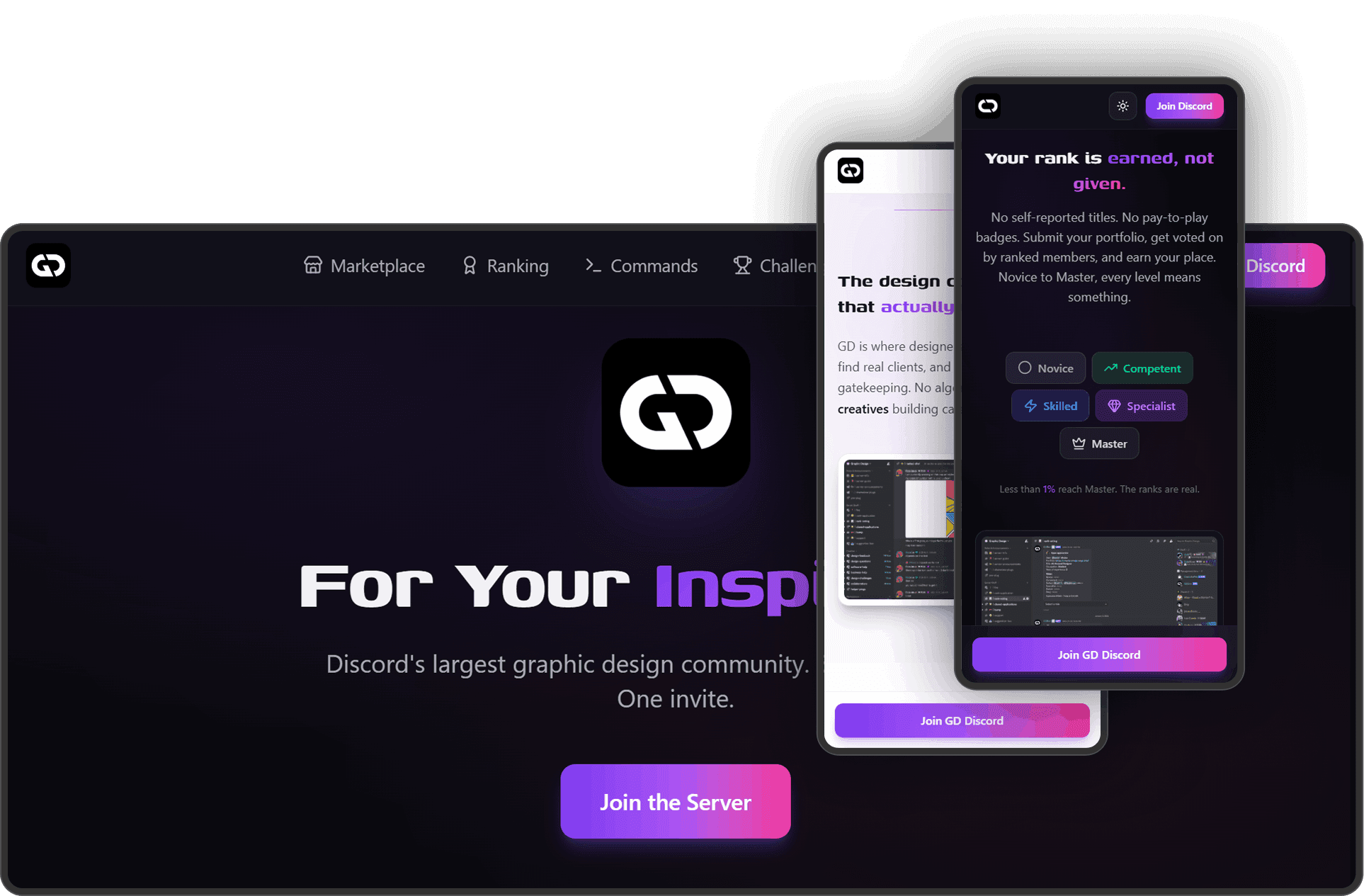
GD uses a peer-voted progression from Novice through Master. Members submit portfolios, ranked designers vote, and fewer than one percent reach Master. The ranking is not a perfect measure of talent, but it is more useful than a self-selected seniority label or a badge sold by the platform.
The same principle extends to contests, feedback, and creator visibility. Status should come from observable contribution and judgment. When reputation is connected to real participation, the community can create a stronger discovery signal without turning every interaction into an algorithmic popularity contest.
System ruleReputation becomes useful when the path to earning it is visible and costly to fake.
18.04
This file stops before community operations become private
No private member data, transaction details, moderation records, staff conversations, or internal marketplace metrics are included here.
The career signal is the public operating range: building for two sides of a market, designing trust and reputation mechanics, managing creator visibility, and keeping a large community useful after scale makes the simple version stop working.
What survived
Three things I would carry into the next build
- Marketplace trust is a product system, not a safety paragraph.
- Visibility only stays valuable when earning it is harder than claiming it.
- Community scale creates product obligations long before it creates product clarity.